
How many calories does digestion burn?
On this page
About 5 to 15% of everything you burn in a day, so roughly 100 to 300 calories on a 2,000 calorie day. Protein costs the most to process: 20 to 30% of its calories go to handling it. Fat costs almost nothing. It’s one more reason to put protein first, along with how full it keeps you.
You’ll hear about foods that take more to digest than they contain, and meals that boost your metabolism. The cost of digestion is real, but even protein, the most expensive food to process, leaves you 70 to 80% of its calories. No food comes out below zero.
The simple version
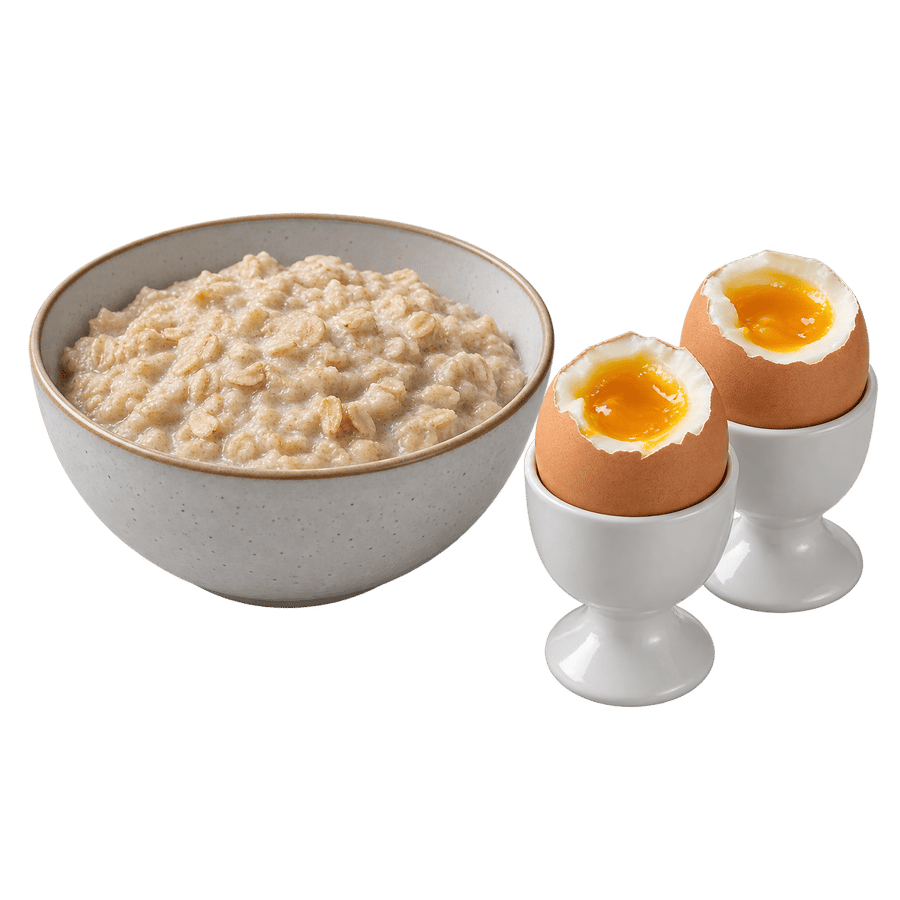
Food comes with a processing fee. For protein the fee is high, about a quarter. For carbs it’s small, and for fat it’s close to nothing.
The numbers
From a 2004 review of the research:
| What you eat | Spent processing it |
|---|---|
| Protein | 20 to 30% |
| Alcohol | 10 to 30% |
| Carbs | 5 to 10% |
| Fat | 0 to 3% |
| A mixed diet | 5 to 15% of the day’s burn |
So 100 calories of protein leaves you about 70 to 80, and 100 calories of fat about 97 to 100. The same review says the energy spent processing protein has an important effect on how full you feel.
What to do
- Put protein at every meal. Typical is 1.2 to 1.6 grams per kilogram of body weight a day, about 100 to 130 grams at 180 pounds. The protein calculator gives yours.
- Don’t count digestion separately. Your TDEE already includes it: the activity multiplier scales your resting burn up to the whole day’s burn, digestion and all.
3 sources
- Westerterp, Diet induced thermogenesis, Nutrition and Metabolism, 2004pubmed.ncbi.nlm.nih.gov
- Westerterp, Diet induced thermogenesis, full text, Nutrition and Metabolism, 2004pmc.ncbi.nlm.nih.gov
- US Department of Agriculture and US Department of Health and Human Services, Dietary Guidelines for Americans, 2025 to 2030, protein, checked 2026-11-10realfood.gov
