Is your watch's calorie number right?
On this page
Not very. Your watch measures steps and heart rate well, then estimates calories from them with a model of a body like yours. In a Stanford test of seven devices, every one missed calories by more than 20%, and the worst by 93%. Use the number to compare your own days, never to decide how much to eat.
What we’d do
Trust your watch for steps and heart rate. Use its calorie number only to compare one day with another, a walking day with a walking day. Set how much you eat from your scale trend instead, with the calories calculator as the starting guess. Don’t eat back its exercise calories. And keep your weight up to date in the watch’s settings, since the estimate uses it.
If you remember three things
- Steps and heart rate are close. Calories are a guess. Off by 20% or more in lab tests.
- Active calories sit on top of resting calories. Your total is the two added together. Never add active calories to a maintenance number that already counts your movement.
- Use the watch to compare days, and the scale to set your number.
Why does the number look so exact?
The watch says you burned 2,743 calories today. Not about 2,700, but 2,743. A number that precise feels measured, so people eat to it, and many food apps add the watch’s exercise calories straight onto the day’s budget.
Precise and right aren’t the same. A kitchen clock that runs ten minutes fast still tells you how long the roast has been in the oven. It’s no use for catching a train. A watch’s calorie number is a bit like that clock, with one more catch: how far off it runs changes with what you’re doing. So compare like with like, a walking day with a walking day.
What’s in the number?
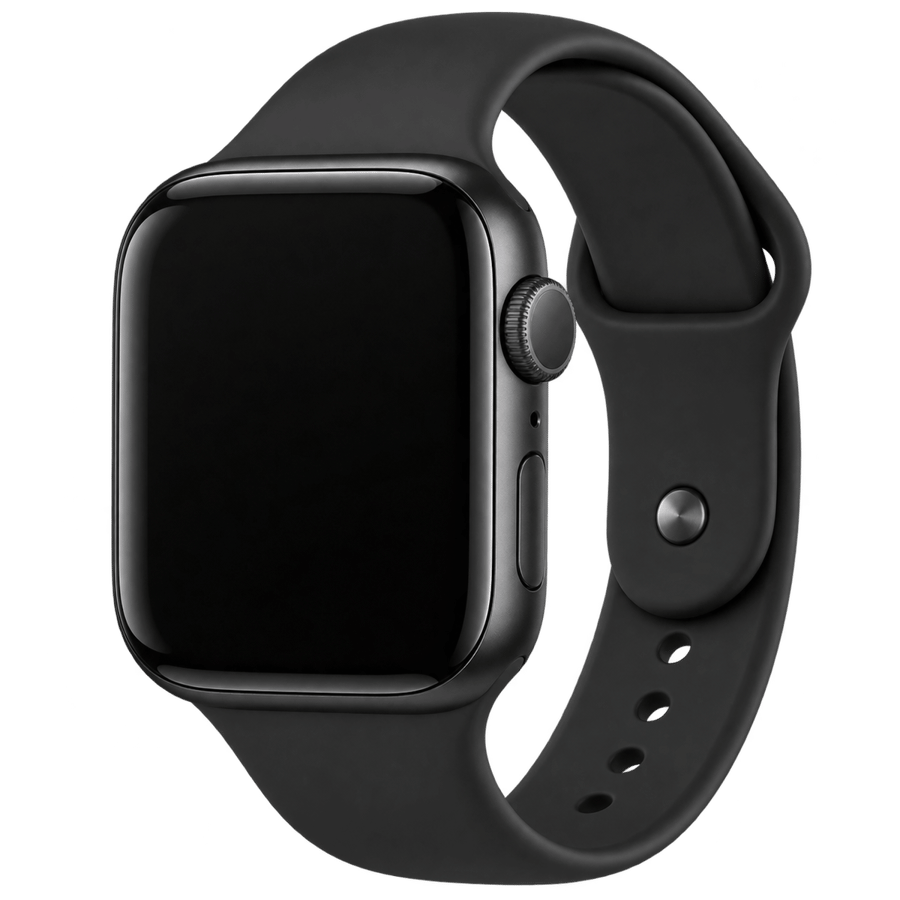
A watch can’t measure calories. Labs measure them from the oxygen you breathe in and the carbon dioxide you breathe out. Your watch measures your movement and your heart rate, and turns them into calories with a model. Apple says its watch uses your height, weight, gender and age to work out how many calories you burn, and that calibrating it improves the distance, pace and calorie numbers.
The number comes in two parts. In Apple’s health records, active energy is “the energy that the user has burned due to physical activity and exercise”, and it leaves out resting energy. Resting energy is what your body burns to keep its normal resting state: breathing, circulating blood, keeping cells going. Your total for the day is the two added together.
That split is where people double count. A maintenance number from a calculator, or from your scale, already includes your movement. Adding the watch’s active calories on top counts your walking twice.
How far off is it?
Strong Many lab studies, two large reviews, the same answer: heart rate and steps are good, calories are not.
Seven devices, one lab
60 adults sitting, walking, running and cycling, 2017. Shcherbina and colleagues, Stanford
Six of the seven devices measured heart rate within 5% on a bike. For calories, no device got under 20% error, and the median error ran from 27% for the best to 93% for the worst. Errors were highest when walking, and higher for men, for people with a higher BMI and for darker skin.
The 2017 models. Newer devices have better sensors, and the reviews below include them.
56 studies of the Apple Watch
Pooled review, 2025. Choe and Kang, Physiological Measurement
Heart rate stayed within the 10% mark that counts as valid in every group of studies. Steps mostly did. Calories missed it in every group, whatever the activity or the person.
It pools very different studies, watch models and settings.
60 studies, wrist and arm
Pooled review, 2020. O’Driscoll and colleagues, British Journal of Sports Medicine
How close a device came depended on the activity. Adding a heart rate sensor to the motion sensor made calorie estimates better for most activities.
The studies differed a lot from each other, so the averages hide wide spreads.
We found no watch or ring with published tests showing its calories within 10% across most activities. On a 2,500 calorie day, a 20% miss is 500 calories, the size of a whole deficit.
Should you eat back what it says?
No. Your body also makes up for part of every workout. In a 2021 study of 1,754 adults, only about 72% of the extra calories burned in activity showed up as extra calories burned that day. So even a perfect watch would overstate what a workout leaves you to spend. The full answer, with what we’d do on an unusual day like a long hike, is in should you eat back exercise calories?
How do you use the number anyway?
- For your activity level, use steps. They’re the part the watch gets close. Your activity level turns them into a level.
- To compare days, use the total. If Saturday’s total is 400 higher than Tuesday’s, Saturday was probably more active. We’d trust the direction far more than the 400.
- To set your eating, use your scale. Four weeks of food logs and weigh-ins show your real maintenance. Measure your real TDEE has the method.
- Watch the trend over months. As you lose weight, your watch’s numbers fall partly because you weigh less, and the model knows it. That matches real life: by Kevin Hall’s model, each pound you lose lowers your needs by about 10 calories a day.
Say your watch averages 2,700 calories a day. The calculator gives a range of 2,000 to 2,300 for your size and steps. After four weeks of logging and weighing, your trend shows you maintain at about 2,250. Your real number is 2,250. The watch was about 450 high, and now you know which way it leans for you.
8 sources
- Shcherbina et al., Accuracy in wrist-worn, sensor-based measurements of heart rate and energy expenditure in a diverse cohort, Journal of Personalized Medicine, 2017pmc.ncbi.nlm.nih.gov
- Choe and Kang, Apple Watch accuracy in monitoring health metrics: a systematic review and meta-analysis, Physiological Measurement, 2025pubmed.ncbi.nlm.nih.gov
- O'Driscoll et al., How well do activity monitors estimate energy expenditure? A systematic review and meta-analysis of the validity of current technologies, British Journal of Sports Medicine, 2020pubmed.ncbi.nlm.nih.gov
- Apple, Get the most accurate measurements using your Apple Watchsupport.apple.com
- Apple, HealthKit: activeEnergyBurneddeveloper.apple.com
- Apple, HealthKit: basalEnergyBurneddeveloper.apple.com
- Careau et al., Energy compensation and adiposity in humans, Current Biology, 2021pubmed.ncbi.nlm.nih.gov
- Hall et al., Quantification of the effect of energy imbalance on bodyweight, The Lancet, 2011pmc.ncbi.nlm.nih.gov